VIRSKY SOCIAL GALLERY
Welcome to the Gallery of people connected and empowered through ART. Here, we celebrate creativity and the transformative power of art, fostering a community where artists and art lovers connect for an empowered community. Join us in this inspiring journey.

A sanctuary of art, culture, and creative preservation.
Here, tradition meets innovation through inspired concepts, sustainable ideas, and integrative projects rooted in resilience, nature, and the timeless beauty of wabi-sabi.
Our Story
Virsky Social Gallery serves as a bridge between art, nature, and community — a place where creativity becomes a force for healing, education, and sustainable living.
Through exhibitions, workshops, and cultural projects, it nurtures local talent, revives traditional crafts, and inspires people to reconnect with authenticity and natural beauty.
Its mission is to cultivate resilience through creativity, empowering individuals and communities to express, regenerate, and find harmony in the imperfect — the essence of wabi-sabi living.
The Story Behind the Virsky Social Gallery
Where it began…
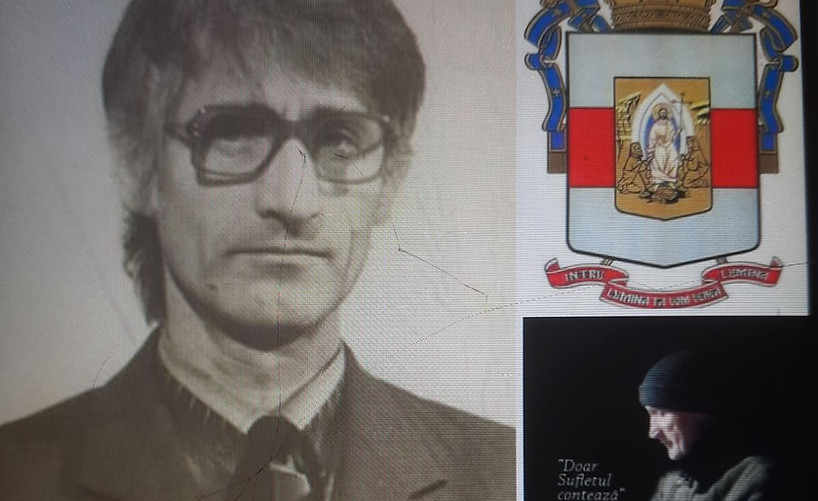
The roots of the Virsky Social Gallery reach back to the life and work of Ion Virsky — a Moldovan national artist, painter, graphic designer, and photojournalist.
A humble and deeply spiritual man, he devoted his entire life to Art, to the artists’ community, and to the Moldovan state. For more than 48 years, he served as a graphic designer and painter, and above all, as a loyal supporter and mentor within the Union of Artists of Moldova (UAP).
Ion Virsky was also a talented icon restorer and painter. Among his notable works are the official logo and emblem of the Metropolis of Moldova, as well as the visual identity and exhibitions for the Writers’ Union’s cultural events. His hands and mind were never still — he painted, sketched, designed, photographed, practiced calligraphy, and created illustrations that carried both beauty and spirit.
He was a true Moldovan at heart, deeply connected to his land, people, and traditions.
However, this very integrity and independence often came at a price. In the Soviet era, those who stood firm in their national and artistic identity were often marginalized. Despite his lifelong dedication, Ion Virsky was denied the housing privileges given to most of his colleagues. Instead, he spent decades living and working in a 5-square-meter art studio with one high window and no facilities — the shared washroom was at the end of a long corridor. That tiny studio became both his home and sanctuary, a space where he continued to create despite the cold and solitude.
During the early 1990s, amid the turmoil of Perestroika, the collapse of the Soviet Union, and the conflict in Transnistria, his family faced extreme hardship. Ion and his wife struggled to provide for their two young daughters, often surviving only through the kindness of relatives from the countryside who sent them food. Hunger and uncertainty were part of daily life, but so was a quiet, unwavering dignity.
These were the times when the Moldovan people were fighting for independence, and Ion and his wife, Tamara, stood among the active citizens and intellectuals who sought to contribute in any way they could. At the request of a government official, Ion re-illustrated the Moldovan political map from 1928, and Tamara, who had previously worked at the National Publishing House Enciclopedia, took on the responsibility of publishing it. Out of patriotism and trust, they guaranteed the printing costs with their own home.
However, the government representative failed to honor the agreement, leaving the Virsky family burdened with the entire printing debt for 10,000 A1-size maps. Soon after, the publishing house began to demand repayment, sending “collectors” who threatened the family with violence and death.
That was the breaking point — the moment when their dreams collapsed. Forced to pay the debt, they sold their home, losing not only their shelter but also their sense of safety and belonging. In those unsettling times, Tamara and the two daughters sought refuge in a neighboring country, searching for peace and survival.
Ion faced a heartbreaking choice: to leave Moldova or remain. He chose to stay — bound by his love for the land, his art, and his roots. Yet this decision deepened the pain of separation. From then on, agony grew between the roots and the family, and a single word came to define their story — Dor — the untranslatable Moldovan feeling of longing, love, and eternal yearning.
The family never returned to Moldova, and Ion spent his remaining years in loneliness and quiet sorrow, surrounded only by his paintings and memories.
However, in 2019, his elder daughter — a painter herself — returned to see him after many years. Both carried deep, unhealed wounds, and though love remained between them, their hearts often spoke different languages. Ion longed for her to reconnect with Moldovan society and to continue his legacy at home, while she felt that this same society had been the force that kept her father in exile within his own land. Their meetings were filled with both affection and tension — a dialogue between two souls seeking to understand each other through the pain of different generations.
In the last three years of his life, their communication grew distant due to disagreements, while Ion’s health rapidly declined. Nearly 98% blind, he lived his final days in the same cold art studio, without running water or basic facilities — a space that once gave life to so much beauty, now filled with silence. The COVID-19 pandemic deepened his isolation, as the city grew quieter and his community busier with its own survival.
On June 11, 2024, Ion Virsky passed away at Hospital No. 4 in Chișinău. He was laid to rest in the Doina Cemetery (place 285), carrying with him a final reflection — that people can be unkind, but that only the soul truly matters.
It is from this reflection that the Virsky Social Gallery was born — to continue his dream, to heal what was once divided, and to remind us that through art, empathy, and solidarity, we can be better.
The Virsky Social Gallery carries forward his legacy — transforming pain into purpose, solitude into community, and memory into a living bridge between art, nature, and humanity.
Contact
We’d love to hear from you.
Feel free to reach out for collaborations, inquiries, or simply to say hello.
The Virsky Social Gallery is growing like a garden — rooted in creativity, care, and community. One day, we hope you’ll visit us at our traditional Moldavian house, surrounded by a 43-are organic garden, where art and nature meet in harmony.
We are still in the process of development, and any kind support or partnership that helps nurture this vision is deeply appreciated.
Let’s stay connected — in art, empathy, and spirit.orm link here]
Visit Us
Virsky Social Gallery
The house for Arts and Community
info@virsky.org